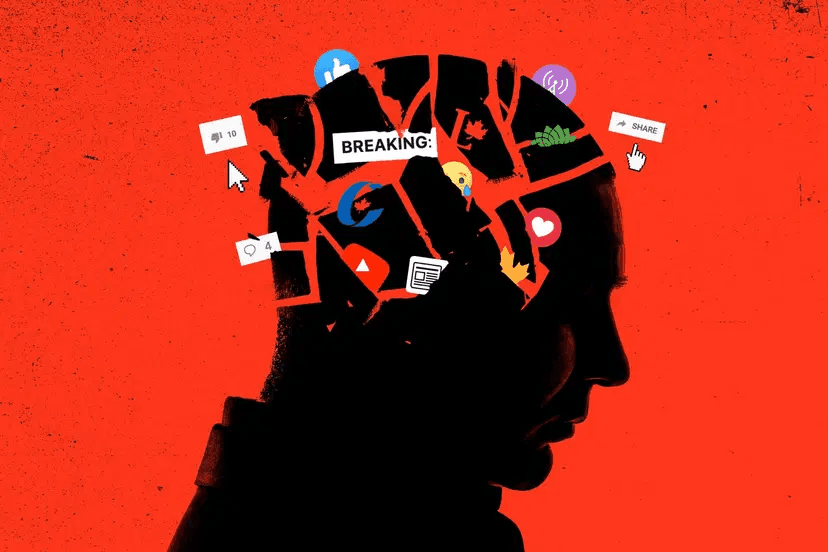
Misinformation vs. Disinformation: What's the Difference, and Why It Matters
Misinformation and disinformation are often used interchangeably. They shouldn't be. The distinction determines not just how we categorise a false claim, but how we respond to it — and why the wrong response can make things worse.
When a false claim spreads online, two questions immediately arise. Did the person sharing it know it was false? And does that distinction actually matter?
The answer to the first question determines whether we're dealing with misinformation or disinformation. The answer to the second determines how you respond. Getting this wrong — treating deliberate manipulation as innocent error, or treating genuine confusion as bad faith — leads to responses that don't work and sometimes make things worse.
Misinformation: false without intent
Misinformation is inaccurate information shared by someone who believes it to be true. The person spreading it isn't lying — they're mistaken. They might have misread a headline, misunderstood a statistic, or trusted a source that turned out to be unreliable. They share in good faith, and the harm they cause is real, but it's not deliberate.
Misinformation is, in a sense, the normal condition of a complex information environment. People process enormous amounts of information imperfectly. Errors propagate. Corrections travel more slowly than original claims. This is a structural problem, and it calls for structural solutions: better media literacy, clearer source labelling, faster corrections, and platforms designed to slow the spread of unverified claims.
Disinformation: false by design
Disinformation is something different. It is inaccurate information created and shared with the deliberate intention to deceive. The person or organisation behind it knows the content is false. The falsity isn't an accident — it's the point.
Disinformation campaigns are typically coordinated, resourced, and strategic. They are designed to serve specific political, commercial, or ideological goals. They exploit the same channels through which misinformation spreads — social media, messaging apps, low-quality news sites — but they do so with purpose and planning.
Why the distinction matters
The difference between misinformation and disinformation determines what kind of response is appropriate.
Media literacy works against misinformation. Teaching people to check sources, read past headlines, and verify claims before sharing can reduce the spread of honest errors. It gives individuals the tools to be more sceptical and more accurate.
But media literacy doesn't stop disinformation. An organisation running a coordinated campaign to manipulate public opinion isn't going to stop because the public learns to read more carefully. The campaign is designed precisely to evade that kind of scrutiny — to create content that feels credible, to seed it through apparently legitimate channels, and to amplify it through coordinated networks of inauthentic accounts.
What stops disinformation is intelligence: the ability to detect coordinated inauthentic behaviour, to map the networks behind it, to identify the accounts spreading it, and to predict where it will move next. This is what Ariadne is built to do.
How Valent approaches the distinction
At Valent, we don't focus primarily on the content of claims — we focus on how information moves. When we analyse online activity around a particular narrative or event, we're looking at the behaviour of accounts: who is posting, when, at what volume, in what coordinated patterns. We're asking whether what we're seeing looks like organic public conversation or engineered amplification.
This approach allows us to identify disinformation campaigns even when the content is superficially plausible. A sophisticated campaign won't necessarily spread obviously false claims — it might spread misleading framings, selective facts, or technically true statements designed to produce a false impression. What gives it away is the behaviour, not the content.
When we find evidence of coordination, we know we're looking at disinformation: a deliberate campaign. When we find evidence of organic spread, even of false claims, we're more likely dealing with misinformation: an error in circulation. The response in each case is different, and getting to the right response requires getting the diagnosis right first.
Both are harmful. Both deserve serious responses. But they are not the same problem, and they will not yield to the same solutions.
- AnalysisApril 23, 2026
Rest Is Politics: Inside Valent's Methodology for Detecting Online Manipulation


- AnalysisApril 23, 2026
Daily Mail: How Bots and Coordinated Campaigns Brought Down First Republic Bank